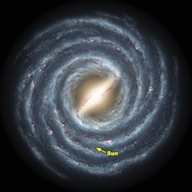
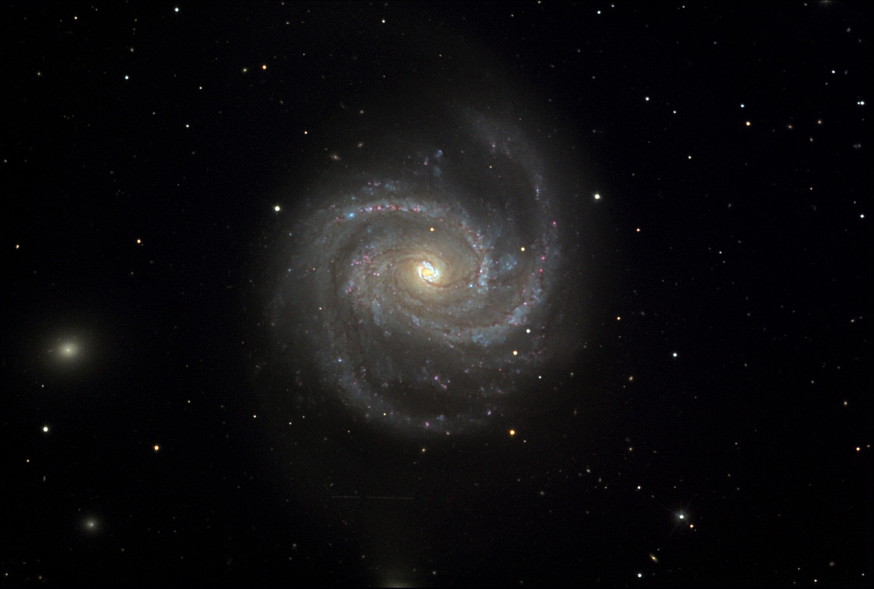
<-- click me> If you've ever seen the Milky Way, you would know why it is named as such. Sorry, bad joke. Anyway, of course it's not possible to see the structure of the Milky Way from Earth as we appear to be near the edge of a western spiral arm, and when we look up it's like looking at the edge of a bicycle wheel. The image above in the header is likely what our galaxy looks like head on, and the image on the left is what it looks like from space. It is a relatively large galaxy in the scheme of things. It's about 100,000 light years across, and is similar in shape to M100 below. There is more about galaxies in the Deep Space section of my site.
What follows is a really brief history of how we gained our understanding of the sky.
The ancient people must have wondered why all the stars kept fairly still, but there were seven "stars" that moved. They called these: travelers, and the ancient greek for traveler is where we get the name planet. Of course, they could not see the other "travelers" as they are beyond the limits of the naked eye. The seven were the Sun, Mercury, Venus, Mars, Jupiter, Saturn and Uranus.
What we still call "shooting stars", they saw as falling stars, perhaps the star had upset a god.
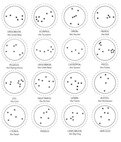
Some of their scientists or philosophers tried to make sense of all this by organizing groups of stars into groups - which we call constellations. They also developed (or at least tried) many of the geometrical relationships of the heavenly bodies. The following are links and little biographies of some of the most important of the greek astronomers. I learned a lot about the subject collecting and reading the links. I hope you take some time to read the links as well as my superficial text. What they developed with only very primitive computers (their heads), set the stage for our "modern knowledge".
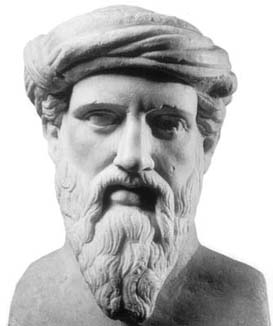
500BC: Pythagoras, argued that the Earth was round. He also tried to explain the nature and structure for the universe as a whole. He developed an early system of cosmology (the study of the universe, as opposed to cosmogony, which is the study of the philosophy of the universe).
370 BC, Eudoxus developed a mechanical system to explain the motions of the planets. Unfortunately, Euduxos taught that the planets, sun, the moon, and the stars revolved around the earth. Bad idea.
Later in the 300s BC, Aristotle incorporated this earth centered, or geocentric, theory into his philosophic system. This system stuck. Very bad idea.
Heraclides of Pontus proposed that the seeming westward movement of the heavenly bodies is due to the eastward rotation of the earth on its axis. He also taught that Venus and Mercury revolved around the sun, not the earth.
In the 200s BC, Aristarchus (also of Samos - must have been something in the wine) suggested that all the planets, even the Earth, revolve around the sun. Heraclides and Aristarchus were way ahead of their time, and their theories were not accepted. These two should be read and highly regarded although we tend to reserve our admiration for Aristotle.
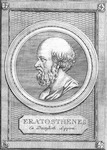
Eratosthenes who was born in 276 BC, demonstrated the Earth's circumference and a system for defining latitude and longitude, giving us global time zones (although they didn't have digital watches for while, and it was difficult to lug around stone sundials when traveling for the weekend). '
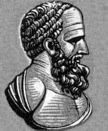
Hipparchus, who lived around 140 BC, divided the stars that he could see into classes of apparent brightness. He estimated the size and distance of the moon, found a way to predict eclipses, as well as calculating the length of the year to within 6 and a 1/2 minutes!
These last four people were really the best minds of their times. They thought things through patiently throughout their lives and developed the basis for modern astronomy. Their work was not accepted for hundreds of years (often like great artists), but they teach us a lesson: be true to yourselves. We’ll see that again later on.
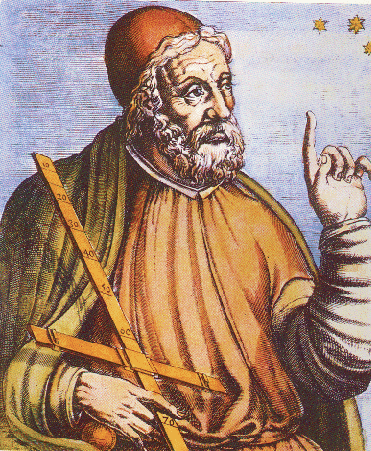
Ptolemy expanded on Aristotle's and Hipparchus's theories during the 100s AD. He was a Greek astronomer who lived in Egypt. He published a book called the Al-Magest, in which he presented his ideas and summarized and in some sense plagiarized those of his predecessors. This work is our main source of knowledge of Greek astronomy.
So, greek astronomers formed the foundation for modern astronomy. Hipparchus's system of magnitude of brightness (why one star looks brighter than another) is still used today, although it has been modified slightly. Some versions of his ideas and his table of planetary motions were accepted for nearly 1,500 years.
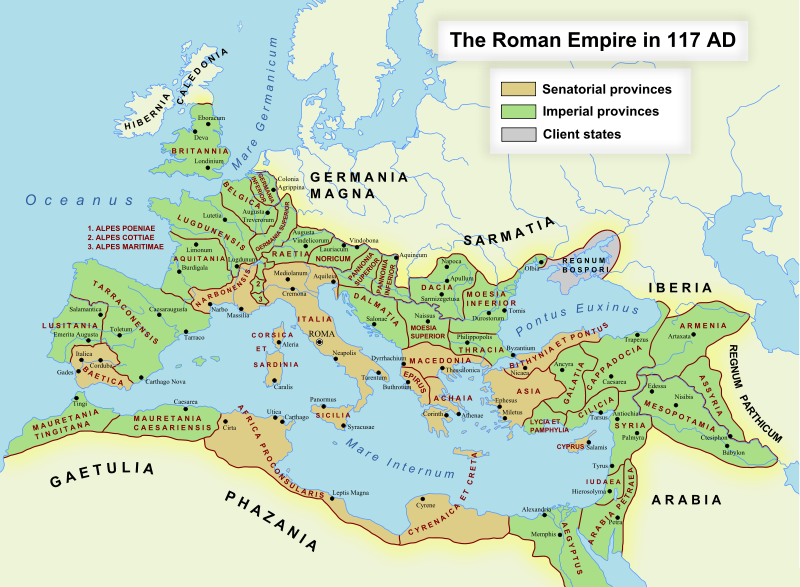
OK, So then come the Romans who found it much more convenient to destroy mathematics and astronomy and use a simple decimal system.
After all, we have 10 fingers and toes so who needs more than that.
Other than the decimal system, they revived the Earth-centric philosophy, simply and conveniently named the planets as gods, and turned the science of astronomy into a form of worship, which we know as Astrology.
blaaah.
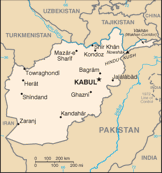
This belief system still exists in Alaska, and in parts of Afghanistan.
It was held firm by the Roman colonies and inherited by the Roman church. Any dissent was met with mild punishment like being burnt alive or being torn limb from limb.
This was our first dark age.
An age where people were punished for having different thoughts or beliefs than the norm. Let’s move on.
Too depressing.
So, jump ahead to:
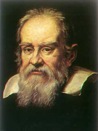
Yep, Galileo Galilei. What he did which was immensely cool was this: For a number of years preceding his work, “Technicians” had realized that if one shaped glass a certain way, people with eye problems could see properly. Indeed, way back, some aging Romans were reputed to have read books by peering through water drops which magnified their poor vision.
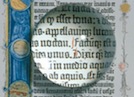
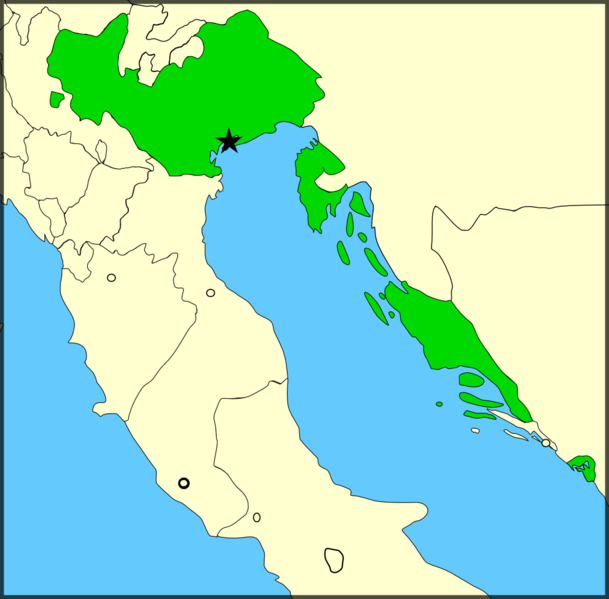
Around 1000 A.D. the reading stone, what we know as a magnifying glass, was developed. It was a segment of a glass sphere that could be laid against reading material to magnify the letters. It enabled aging or poor-sighted monks to read and write and was the first real reading aid. The Venetians learned how to produce glass for reading, and later they constructed lenses that could be held in a frame in front of the eyes instead of directly on the reading material. The most famous of these were Gucci, Armani, Versace and Peretti.
So, Galileo's insight was in retrospect, simple. What if he made a larger magnifying glass and turned it up to look at the night sky. Fortunately, he did not try this with the sun. Unfortunately he lived in an age where people believed the world was 6000 years old, was flat and everything rotated around them and it. (No, not now, this was 600 years ago). No, he did not live in Alaska but in Nebraska. (another bad joke - not me - Nebraska). Just kidding, sort of..
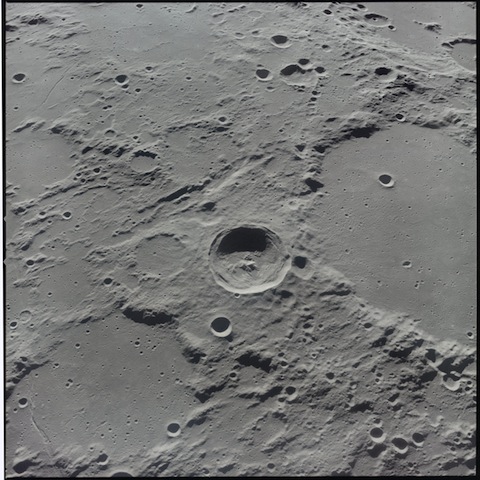
What Galileo saw astounded him. He was first to see craters on the moon, then later, he turned his attention to what we now call Jupiter (Roman name, they took over the names of the travelers and gave them the names of their Gods).
The responsibility for the probable repercussions and change that this finding would bring about in human thought that must have terrified him. The geocentric view had been dominant since the time of Aristotle. Still, he had the courage to present his work, and gave demonstrations through his telescope. Of course, this resulted in the Catholic Church's prohibiting its advocacy saying this was contrary to the Scriptures. Galileo was eventually forced to recant his heliocentrism and spent the last years of his life under house arrest on orders of the Inquisition.
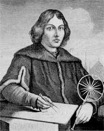
To be fair, an earlier man Nicolaus Copernicus had already realized - through sheer force of thought - that the geocentric view (everything rotates around Earth) was wrong, but his interests were wide and perhaps as a high official (including being a high Catholic Priest), he had no real need to upset his life.
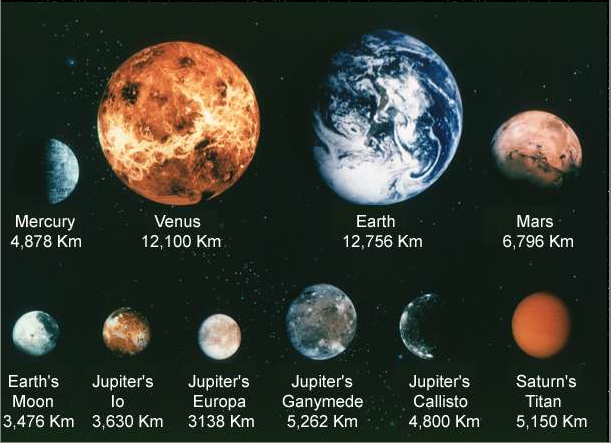
Galileo saw four moons of Jupiter (we now know there are at least 63). We call the four, the Galilean moons in his honor. They are Europa, Callisto, Ganymede and Io.
This is what they look like in relation to the Earth and the inner planets:
and this is what the planets look like compared to each other:
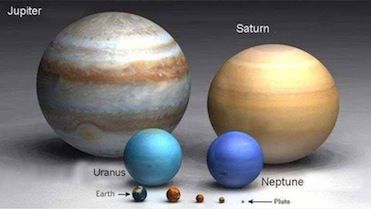
(1 km = 5/8 mile)
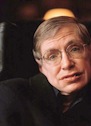
According to Professor Stephen Hawking, Galileo probably bears more of the responsibility for the birth of modern science than anybody else, and Professor Albert Einstein called him the father of modern science. Mr Hawking (he recently refused a knighthood), is suffering from Lou Gehrig’s Disease, (ALS).
The lesson to children and parents reading this to their children is this: If your world does not believe you or even scorns you for your beliefs, it does not mean you are wrong. Just have courage and believe in yourselves.
Just so we don't get too smug about our being so smart and beyond the geocentric view, remember that we still refer to each day as having a Sunrise and Sunset - as if it was the sun rotating rather than us.
I will now jump ahead a bit. Of course Galileo's ideas and writing could not be kept hidden in the cosmopolitan 1500s and early 1600s. At that time, the “New World” was being “discovered”. Trade between Europe, America and Asia was expanding, and colonialism was being born. To read more about Galileo's contribution to the way we think today, I suggest you go here.
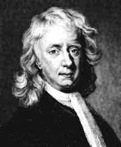
Only by the 17th century had the west had largely abandoned the geocentric view and this change led to a vast new realm of science and technology, much too much to write about here. But to the kids, study Galileo, Kepler, and Sir Isaac Newton. If you get turned on, study Descartes, and of course Albert Einstein and Steven Hawking. These people are probably some of the most intelligent humans ever to roam the Earth.
Again to the kids, no matter where you are or where you come from: Ask yourselves questions. Why is the universe here? How did this happen? How big is it? What do we know? Does it feel right? In simple words, get curious! and Read Read Read.
Now to pragmatics. So you’d like to look at the sky and learn a bit about it. What follows in the next pages of my site are some ideas and technologies for you personally. After that, there will be a section on what the world’s space programs are doing.
I hope you are all still with me!