THE DEVELOPMENT OF CHEMICAL PHOTOGRAPHY
MONOCHROME (BLACK AND WHITE)
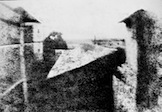
The first permanent photograph was an image produced in 1825 by the French inventor Joseph Nicéphore Niépce. That's the picture at the top of this page.
DAGUERREOTYPE PROCESS
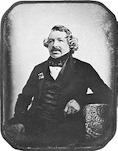
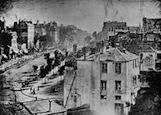
The daguerreotype is a unique photographic image allowing no reproduction of the picture. Preparation of the plate prior to image exposure resulted in the formation of a layer of photo-sensitive silver halide, and exposure to a scene or image through a focusing lens formed a latent image. The latent image was made visible, or "developed", by placing the exposed plate over a slightly heated (about 75°C) cup of mercury.
The mercury vapor condensed on those places where the exposure light was most intense, in proportion with the areas of highest density in the image. This produced a picture in an amalgam, the mercury vapor attaching itself to the altered silver iodide. Removal of the mercury image by heat validates this chemistry. The developing box was constructed to allow inspection of the image through a yellow glass window while it was being developed.
The next operation was to "fix" the photographic image permanently on the plate by dipping in a solution of hyposulphite of soda – known as "fixer" or "hypo". The image produced by this method is so delicate it will not bear the slightest handling. Practically all daguerreotypes are protected from accidental damage by a glass-fronted case. It was discovered by experiment that treating the plate with heated gold chloride both tones and strengthens the image, although it remains quite delicate and requires a well-sealed case to protect against touch as well as oxidation of the fine silver deposits forming the blacks in the image. The best-preserved daguerreotypes dating from the nineteenth century are sealed in robust glass cases evacuated of air and filled with a chemically inert gas, typically nitrogen.
DAGUERREOTYPE PROLIFERATION
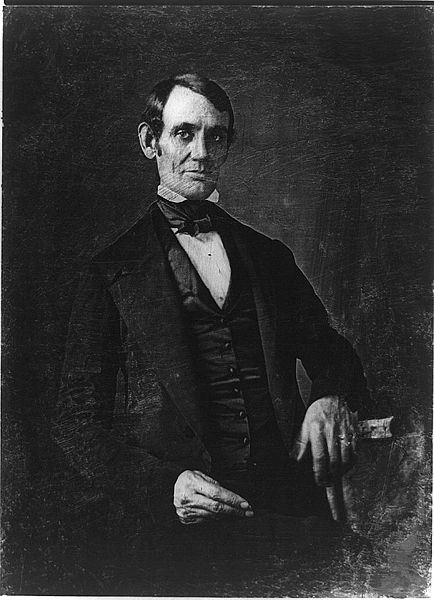
One of these original Morse Daguerreotype cameras is currently on display at the National Museum of American History, a branch of the Smithsonian, in Washington, DC.
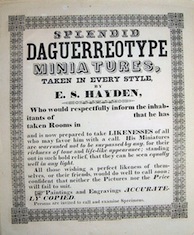
Their wealthy counterparts continued to commission painted portraits by fine artists, considering the new photographic portraits inferior in much the same way their ancestors had viewed printed books as inferior to hand-scribed books centuries earlier. In some ways they were right, in other ways wrong; the vast bulk of 19th-century portrait photography effected by itinerant practitioners was of inferior artistic quality, yet the work of many portrait painters was of equally dubious artistic merit, and although photographic images were monochrome, they offered a technical likeness of the sitter no portrait painter could achieve.
Finally, the first erotic photography and the first experimenters in stereo photography also utilized daguerreotypes.
DEMISE
The intricate, complex, labor-intensive daguerreotype process itself helped contribute to the rapid move to the ambrotype and tintype. The resulting reduction in economy of scale made daguerreotypes expensive and not affordable for the average person. However, it remained very popular in astronomical observatories until the invention of Charge-coupled device cameras, arrived in the late 20th century. According to Mace (1999), the rigidity of these images stems more from the seriousness of the activity than a long exposure time, which he says was actually only a few seconds (Early Photographs, p. 21). The daguerreotype's lack of a negative image from which multiple positive "prints" could be made was a limitation also shared by the tintype and ambrotype and was not a factor in the daguerreotype's demise until the introduction of the calotype. Unlike film and paper photography however, a properly sealed daguerreotype can potentially last indefinitely.
In May 2007, an anonymous buyer paid 588,613 euros ($792,000 USD) for an original 1839 camera made by Susse Frères (Susse brothers), Paris, at an auction in Vienna, Austria, making it the world's oldest and most expensive commercial photographic apparatus.
The daguerreotype's popularity was not threatened until photography was used to make imitation daguerreotypes on glass positives called ambrotypes, meaning "imperishable picture" (Newhall, 107).[6]
LIVING ART
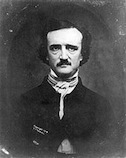
Some daguerreotypes which have maker's marks, such as those by Southworth & Hawes of Boston, or George S. Cook of Charleston, South Carolina, Gurney, Pratt and others, are considered masterpieces in the art of photography. The daguerreotype of Edgar Allan Poe (above) was featured on the PBS show Antiques Roadshow and appraised at US $30,000 to $50,000.
Daguerreotypy continues to be practiced by enthusiastic photographers to this day, although in much smaller numbers; there are thought to be fewer than 100 worldwide. Its appeal lies in the "magic mirror" effect of light reflected from the polished silver plate through the perfectly sharp silver image and in the sense of achievement derived from the dedication and hand-crafting required to make a daguerreotype.
PHOTOGRAPHIC PROCESS DEVELOPMENT (pun somewhere there)
In 1832, French-Brazilian painter and inventor Hercules Florence had already created a very similar process, naming it Photographie. In 1832, with the help of a pharmacist friend, Joaquim Correa de Mello, he began to study ways of permanently fixing camera obscura images, which he named "photographie". In 1833, they settled on silver nitrate on paper, in a process very similar to that developed by Niépce and Daguerre. Unfortunately, partly because he never published the invention adequately, partly because he was an obscure inventor living in a remote and underveloped province in Brazil, Hércules Florence was never recognized internationally as one of the inventors of photography.
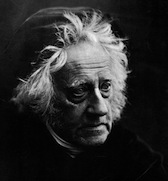
As an aside, we now have links between photography, telegraphy (early communications), astronomy, and chemistry -- that's part of why this website is so constructed!
By 1840, Talbot had invented the calotype process. He coated paper sheets with silver chloride to create an intermediate negative image. Unlike a daguerreotype, a calotype negative could be used to reproduce positive prints, like most chemical films do today. Talbot patented this process, which greatly limited its adoption. He spent the rest of his life in lawsuits defending the patent until he gave up on photography.
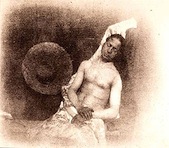
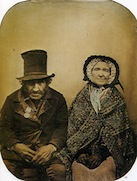
So, by the 1860s, we have just about all the chemicals needed to make reasonable -- and sometimes remarkable, photographs.
Children's author -- and photographer -- Lewis Carroll used this process.
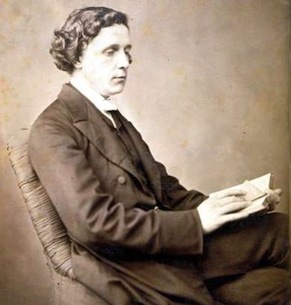
Charles Dodgson - aka Lewis Carroll
ASIA
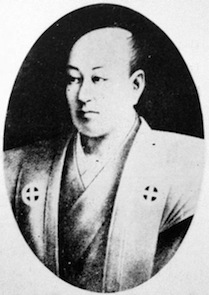
As Japan started to open up to the West during the final years of the Tokugawa (a period called Bakumatsu), foreigners started to settle in Japan and they included photographers who also taught photography to some Japanese. The first photographs of Japanese were also taken. The photo on the left of Lord Shimazu Nariakira is an early example of a Japanese photograph that must date from the 1850s as this leader died in 1858.
Meiji Period (1868-1912): The Emperor (Meiji) of Japan regained control of the country from the Tokugawa. Foreign tourists were allowed to travel to Japan. The foreign and Japanese photographers who set up studios catered mainly to foreign residents and tourists. More Japanese photographers also learned photography and set up their own photo studios across Japan. The importance of this photo-migration was that Japan started to develop it's own film industry, led by Fuji, named after Japan's most famous mountain, Fuji Corporation would later emerge as a powerhouse in photographic supply equipment.
By the 1880s, it's fair to say that Film photography based on the enhanced Collodian chemical process had spread globally. Prints were given the generic name of "Silver Gelatin". Nowadays. photographs have evolved to a point (
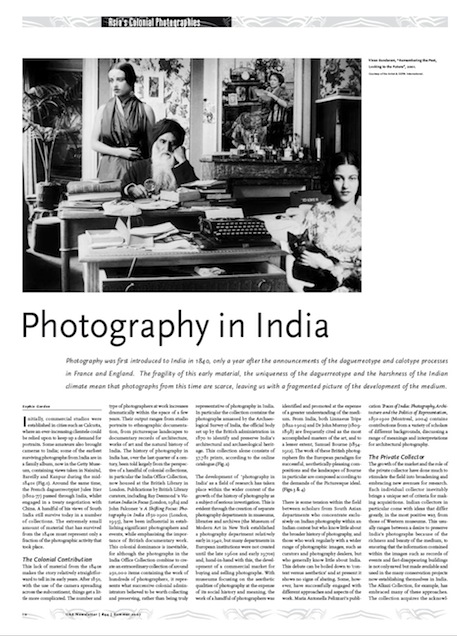
This link shows photographs of the period from Australia and these two pages chronicle the growth of 19th century photography in India.
SUMMARY
Between 1825 and 1875, the chemical development of the photographic process reached the level of sophistication and technique that is still in use today. If only we'd take the time to look at these old images, we would see with our own eyes, photographs that capture life, globally, from almost 200 years ago. The images help us understand the world's cultures as well as the social-political-economic issues that plague us today.